Industry
Mecaniq in Craft Brewery Operations
One of 10 directions Mecaniq could take — a possibility explored in full, not a commitment. The buyer picks one, picks several, or holds the whole menu as optionality.
A twelve-thousand-barrel craft brewery is a more complicated piece of mechatronics than most owners initially realize. The mash tun has a rake drive. The wort transfer runs through pumps with mechanical seals that leak when you don't catch them early. The fermenters depend on glycol jacketing whose chillers are doing the actual hard work of fermentation. The canner — and especially the canner — is the single most failure-prone asset in the building, with a forced-pace seamer that will cost the brewery a full day's production every time it kicks out a leaker. Most craft breweries run all of this on the maintenance discipline of a small team that came up brewing, not engineering. The head brewer knows the wort-transfer pump is making a sound it didn't make last month. The cellar lead knows the glycol setpoint has been drifting on Fermenter 4. None of this gets logged. It gets remembered, badly, and forgotten as soon as the brewery scales past one full-time maintenance hire. Mecaniq's job in a brewery is to convert that tacit knowledge into shared infrastructure. Instrument the eight or ten highest-risk assets — the canner, the wort pumps, the glycol chillers, the centrifuge if there is one — and produce a maintenance schedule the head brewer can hand to the new ops manager without losing the institutional memory. The platform isn't trying to be a brewing-software vendor; it leaves recipes and inventory to the systems already doing that. It's the maintenance layer for the equipment underneath the recipes. The reason this works in craft is the operating-margin reality. Most independent breweries run on margins where a single canner-day saved per month is the difference between profitable and not. The math on intelligence is unusually clean here: prevent one canner downtime per quarter and the platform pays for itself for the year, and the head brewer gets to spend their time on the part of the job they actually went to brewing school for.
Scenarios
Three plausible products or platforms within this vertical. Pick the angle that fits — the rest reveal once you commit. Or click "show all" if you want the static grid back.
Which spark sounds most like you?
Scenario · 01 of 3
Canner uptime monitoring
Mecaniq instruments the canner — seamer, conveyor, fill heads — and predicts when leaker rates will spike. The brewery saves meaningful production days per quarter on what's typically the most failure-prone asset in the building.
Glycol-system health for cellar operations
A specialist module for the chiller and glycol loop that catches setpoint drift, compressor short-cycling, and pump-seal degradation before fermentation profiles get affected. Brewer-readable alerts, not engineering printouts.
Brewery-equipment OEM partnership
Mecaniq partners with North American craft-brewery equipment OEMs — canner builders, fermentation-tank fabricators — to ship instrumented equipment by default. The brewer experiences smart equipment; the OEM gets aftermarket revenue.
Product Concepts
Named, described, and visualized so the brand feels alive. Nothing here is a promise — use them, rename them, replace them, or leave them on the site as ambient proof that Mecaniq has legs.
Hardware
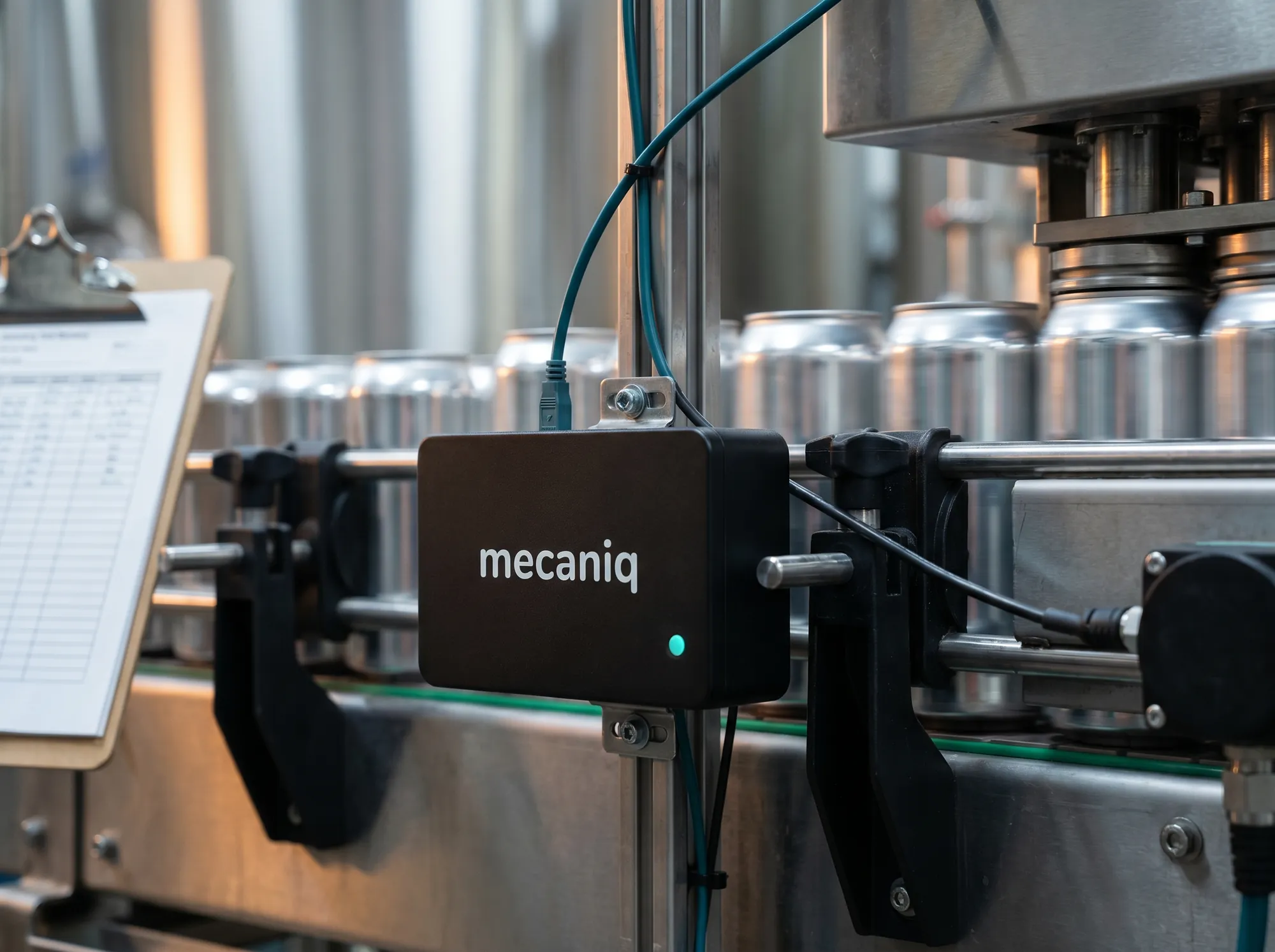
Mecaniq Canner Monitor
A purpose-built monitoring kit for craft-brewery canners — vibration sensors on the seamer, a flow-rate gauge on the fill manifold, leaker-rate logging from the QC station. Ships with the brewery-specific playbook library.
$3,200
Hardware
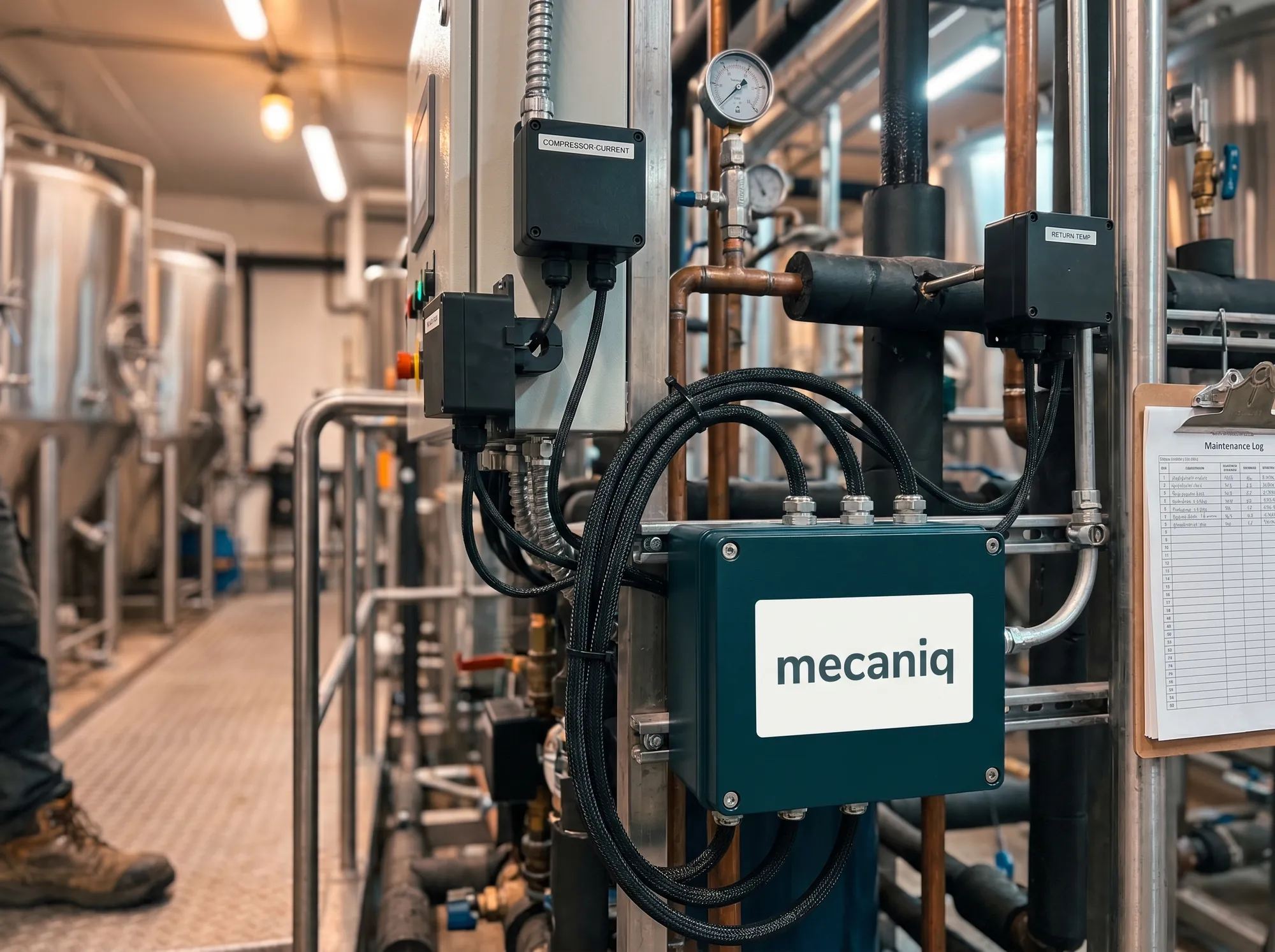
Mecaniq Glycol Loop Pack
Sensor kit for the glycol chiller and distribution loop — compressor-current monitoring, setpoint logging, return-temperature drift detection. Sized for breweries up through the mid-size range.
$1,800
Reference
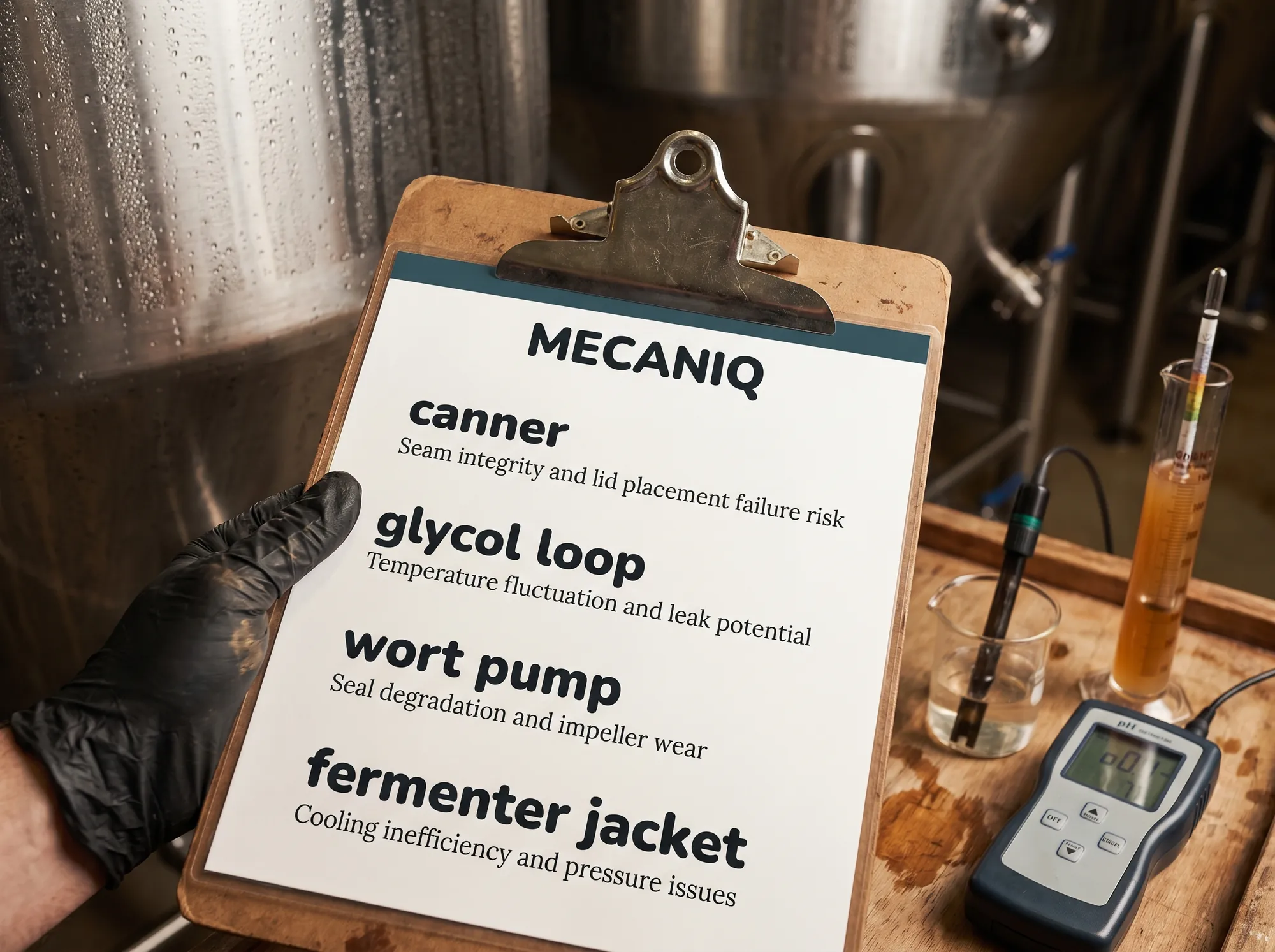
Mecaniq Brewer's Maintenance Card
A laminated reference card sized for the cellar — front shows the four highest-risk assets and their warning signatures, back shows the weekly walkdown checklist.
$15
Software
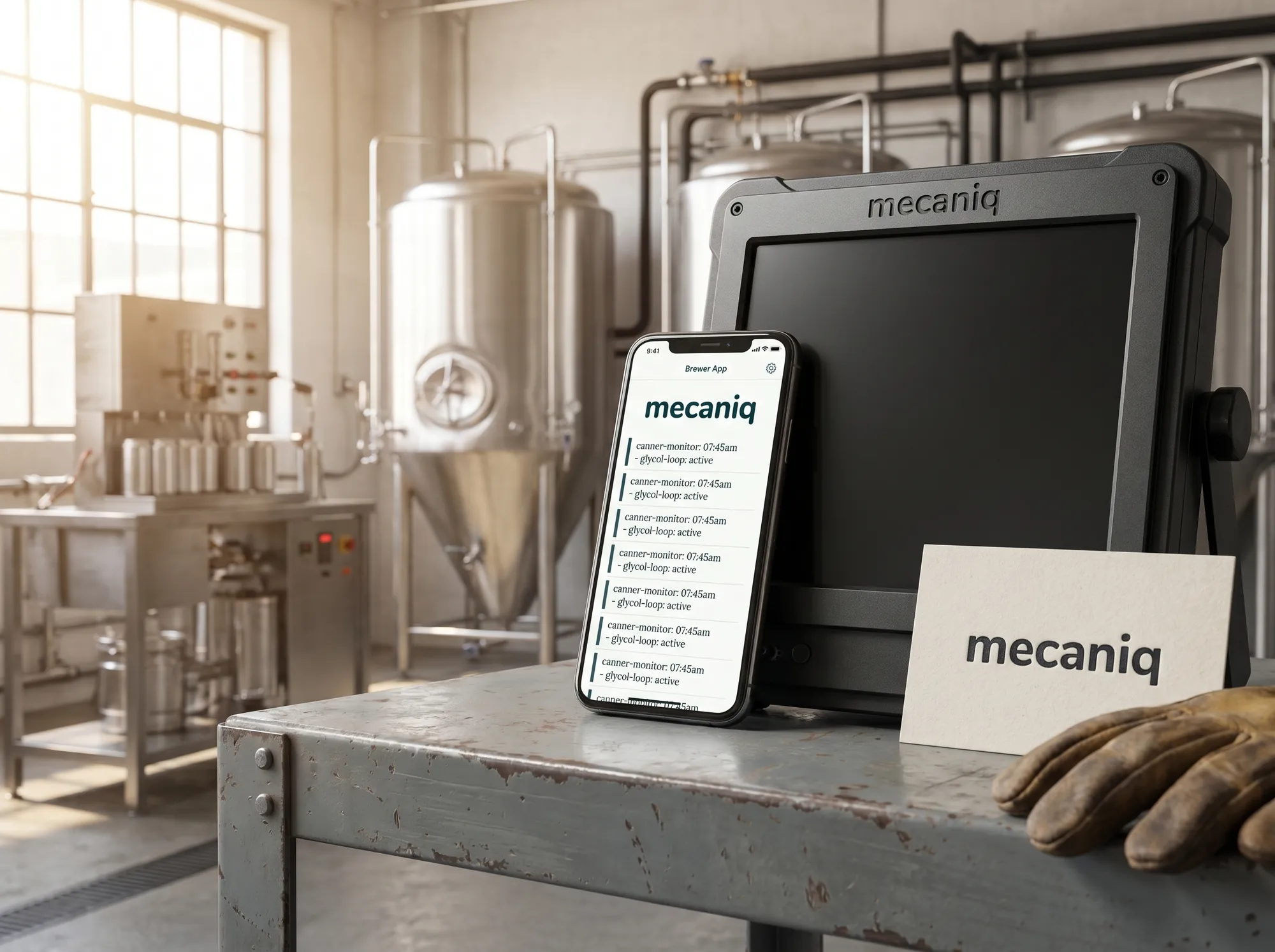
Mecaniq Brewer App
A pocket brewer companion app — working canner monitor log, glycol-loop status, named-brewer-of-record, and the long-arc working archive of every working maintenance ticket under the working brewhouse.
Free with monitor
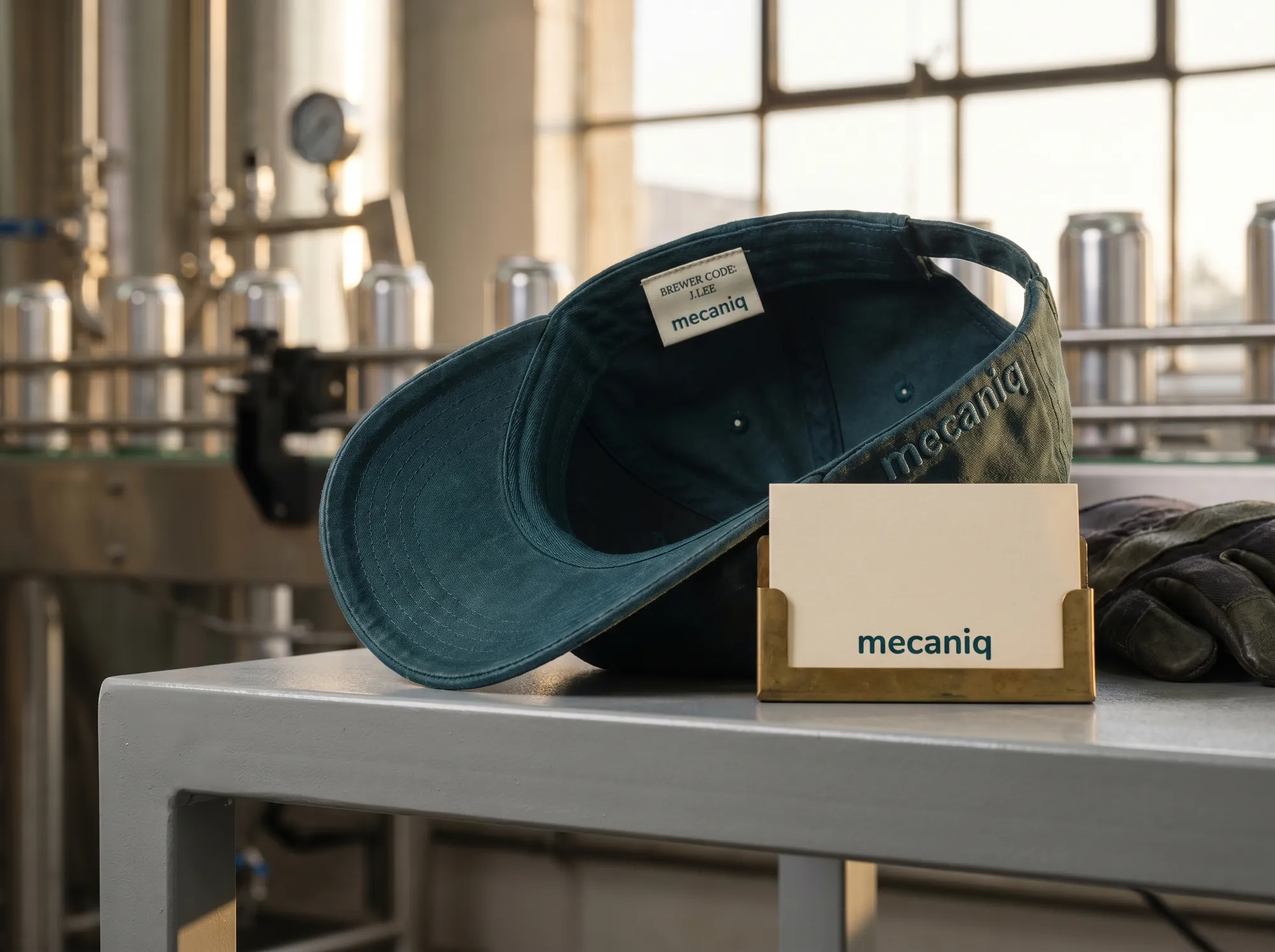
Apparel
Mecaniq Brewer Cap
A heavy waxed-cotton brewer cap in deep teal with the wordmark embroidered above the brim in slate-teal — issued to working brewers and named brewhouse leads at the working canner install.
$36
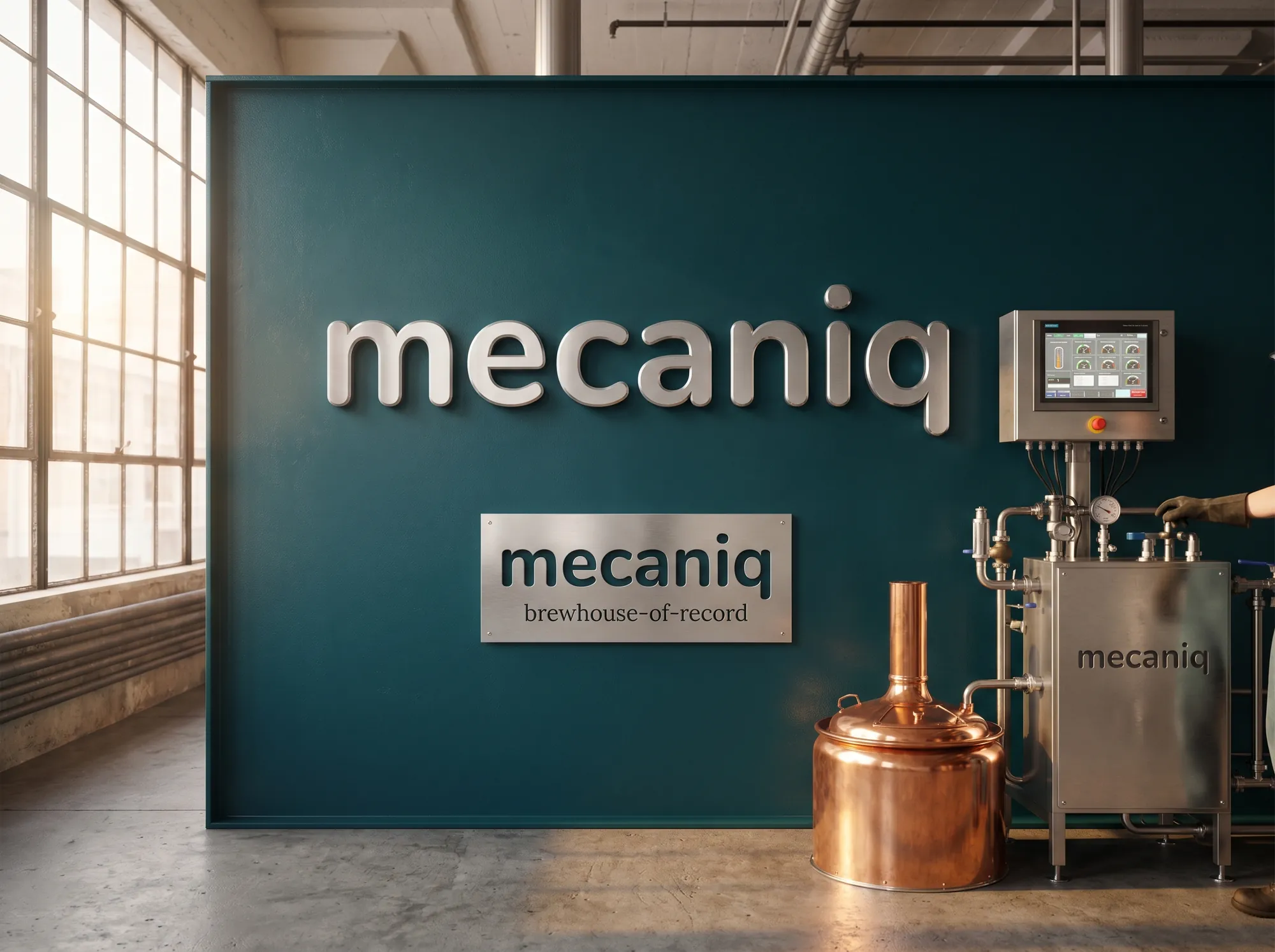
Installation
Mecaniq Brewhouse Sign
A working brewhouse wall sign — wordmark cut from milled aluminum and mounted on a deep-teal painted-steel panel beside the working canner monitor and the working glycol-loop pack.
$680
Radio Ad Script
Thirty seconds of Mecaniq in this vertical. Visitors often play it twice — and every listen makes the brand a little more familiar in their head. That familiarity belongs to the owner.
“Brewer: 'Canner's making a noise.' Engineer: 'Same noise as Tuesday?' Brewer: 'Yeah. Look at the dashboard.' Engineer: 'Replace the seamer bearing tonight, before Saturday's run.' Brewer: 'Mecaniq saved us a production day.' Mecaniq dot com.”
For the investor
Craft Brewery Operations is one of 10 directions.
Mecaniq's verb potential is limited but its noun authority is strong: in mid-market industrial software, the .com that names the category in two morphemes (mécanique plus IQ) is the kind of asset that compounds without input. The vertical pages, the audio scripts, the image prompts, the warm voice profile — all of it keeps accruing reach while the buyer decides whether to ship now or later.